Off-grid cabin in Lapland: 24 hours near Ivalo with no electricity
We spent 24 hours in a wooden cabin near Ivalo with no electricity and a frozen stream for water. On the ride back, our host told us why he doesn't want to build more cabins like it.
Words Bhavya · · Updated
 Photo: Paolo Margari
/
Unsplash
The verdict
Off-grid wilderness cabin near Ivalo
No electricity, a frozen stream for water and the aurora above us at night: a 24-hour stay that changed something in me.
- From
- Price on the host's listing (comment 'Listing' on our reel for the link)
- We stayed
- 1 night (24 hours)
Loved
- Our host, who took us in and out himself and told us why he doesn't want to build more cabins
- The northern lights above the cabin at night
- Just us, snow and birch trees for 30 kilometres
Not so much
- No electricity, so nothing charges until you leave
- It sleeps two, so it doesn't work for families yet
Good for
- Couples
- Aurora watching
- A night away from the resorts
The short version
Book a hosted off-grid cabin for one night between bigger Lapland stays. A host who takes you in and brings you back makes it doable on a first Arctic trip.
We spent 24 hours in a wooden cabin near Ivalo with no electricity and a frozen stream for water. On the ride back, our host told us why he doesn't want to build more cabins like it.
What we'd actually do
-
Pick a cabin whose host takes you in and brings you back. Ours did both, and you don't want to be hunting for a forest cabin alone after dark.
-
Charge every power bank before you go and keep your phone in an inside pocket. With no electricity, nothing charges until you leave.
-
Ask in writing how the water, heating and toilet work, and boil stream or lake water before you drink it.
For 24 hours in February 2026, our only water came from a frozen stream, and the wooden cabin we slept in had no electricity. It was just us, snow and birch trees for 30 kilometres, and at night the northern lights danced above us. This was our off-grid cabin in Lapland, near Ivalo in Finland’s far north, and one night of our honeymoon. On the ride back, our host answered a question from my husband in a way that, as I put it on Instagram, permanently altered my brain chemistry.
What is an off-grid cabin in Lapland like?
Ours was basic: it slept two, had no electricity at all, and the frozen stream was the only water. When I posted the first reel I called it “a raw, authentic, once-in-a-lifetime Arctic experience”. Four months later, writing up what our host told us, I said the stay had changed something in me.
Listings for other off-grid cabins around Ivalo and Inari describe a similar set-up. Heat comes from a wood stove or fireplace and light from candles or a headlamp, the toilet is usually an outhouse, and water comes from a lake, a stream or a hole in the ice. The Kielas wilderness cabin, about 10 km north of Ivalo on the Finnish cottage site Lomarengas, has candle lighting, lake water with no pipes, an outhouse and a wood-heated sauna by the lake. In winter you leave the car about 2 km away and walk in, and the listing warns that the cabin “requires outdoor attitude and skills (how to make fire, for example)”.
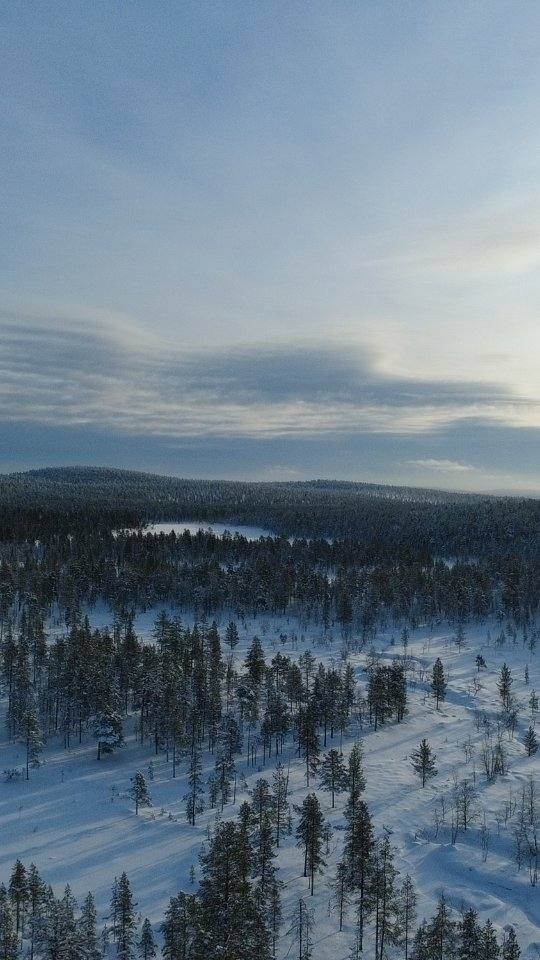
Being 30 km from anyone also helps with the aurora. At our standalone glass igloo, with no neighbours, the sky was pitch black, while the big igloo resorts pack their cabins close together and their outdoor sensor lights keep switching on.
Do you need a host for an off-grid cabin in Lapland?
If it’s your first winter in the Arctic, yes. Ours was a native Finn who works in the forests and is a father of three, and he took us out to the cabin himself and brought us back the next day. In mid-February the sun sets in Ivalo at about 4:10 PM, and a cabin this far into the forest is hard to find on your own in the dark. The host of one island cabin on Lake Inari asks guests not to arrive late for exactly that reason.
On the ride back, my husband asked him whether he planned to build more cabins like this one and turn it into a solid passive income. I quoted his answer on Instagram, and here it is again:
“I’d like to build a bigger cabin that can accommodate a family, and not just two people, like this one. But I don’t want to build multiple cabins. When something gets too big, like tourism is getting in Northern Europe, it is destroying something. Here, it is nature. I want to show the people that the lifestyle we have been following for hundreds of years up North here, is still sustainable and doable even if it is a little less convenient.
I don’t understand why humans have the need to make everything big. Here in North we say, nature keeps humans busy. We don’t need more humans to keep us busy. If you listen to nature, you will be happy. Nature maintains its own balance, when humans try to do that, they end up ruining everything.”
His cabin sleeps two, so for now it doesn’t work for a family or a group of friends. “A little less convenient” is the honest pitch for any cabin like this: no plug or tap, and a fire you have to keep going. If that sounds like a punishment rather than a holiday, book something else for that night.
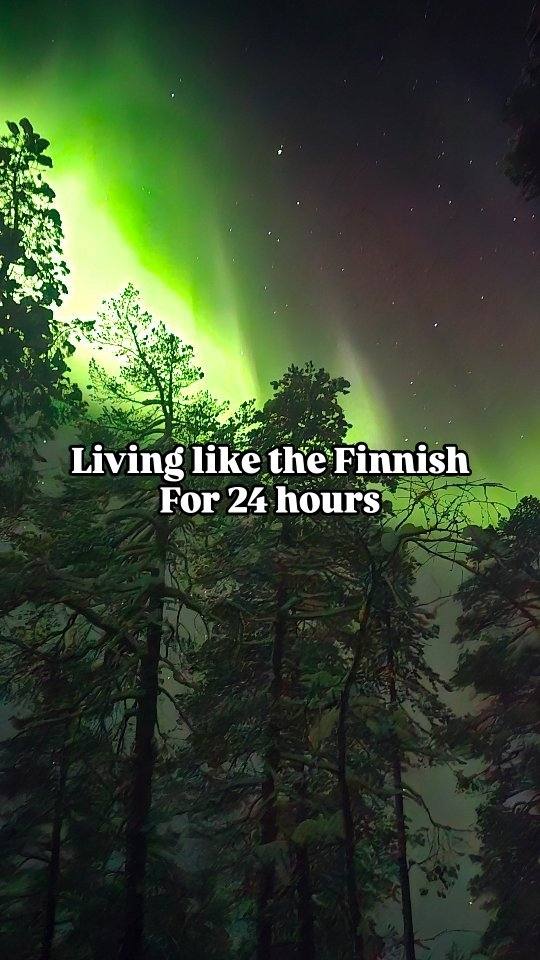
“In the middle of nowhere; just us, snow and the mighty birch trees for 30 kilometres.”
How do you get water when the stream is frozen?
Usually through a hole in the ice. At our cabin the frozen stream was the only source of water for the whole stay.
At some hosted cabins, fetching water is part of what you pay for. Áila Hideaway, a fully hosted cabin in Sodankylä, lists carrying water alongside heating the cabin and sauna and cooking over an open fire, and says its water “is drawn from an ice hole”. At a self-service hut nobody does it for you. Metsähallitus, which runs Finland’s national parks and their huts, lists the drinking water at its Ivalojoki Kultala rental hut as “Must be brought yourself, stream”.
Boil it before you drink it. The same Metsähallitus page says the water isn’t tested and recommends boiling water from natural sources, and the Kielas cabin near Ivalo says the same about its lake water.
Before you book, ask the host two things in writing: who fetches the water, and whether they leave drinking water for you. Carry a full insulated bottle on the way in too, so your first cup of tea doesn’t depend on a pan of stream water.
How cold does it get, and how do you stay warm without electricity?
The Finnish Meteorological Institute says February 2026 averaged about −18°C in northern Lapland, with the whole country 3 to 6 degrees colder than normal. We explored Saariselkä, 25 km from Ivalo Airport, at −30°C.
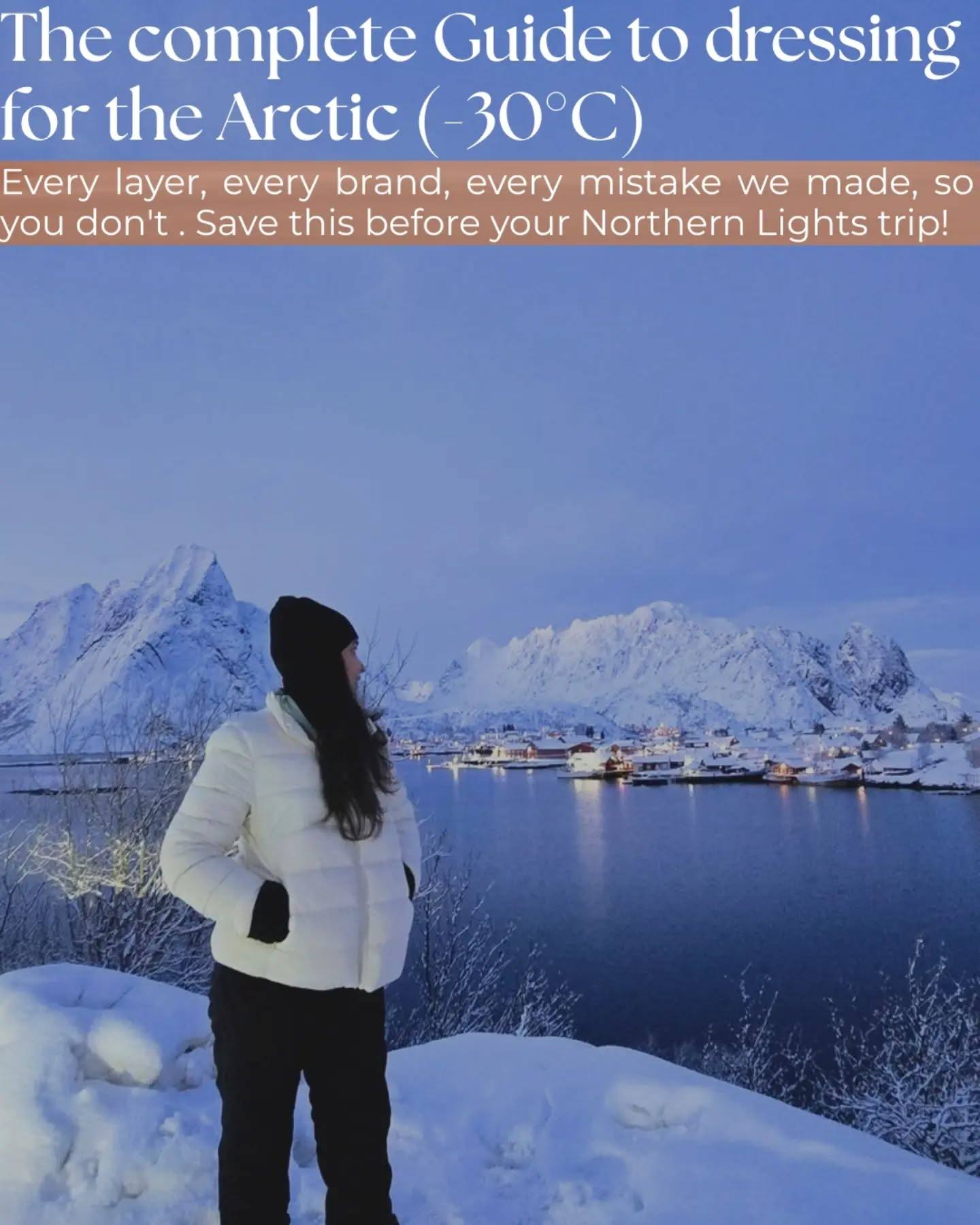
I feel cold at 20°C in Hyderabad. On that trip I stood on a frozen lake at −30°C for two and a half hours and walked back warm, and that was down to layering: four layers, gloves with hand warmers, the two-cap trick and a neck gaiter we used more than anything else on the trip. We bought all of it in India, at Uniqlo (HEATTECH), Decathlon and Marks & Spencer, or rented it. Every layer is in our Arctic packing list for −30°C.
Indoors, how warm you are depends on the fire. Ask how the cabin is heated and whether anyone lights the stove before you arrive. The Kielas cabin isn’t pre-heated, and the Lake Inari island cabin warns that if nobody has stayed in the days before you, it can take several hours to warm up on the coldest days.
How much does an off-grid cabin in Lapland cost?
At the cheap end, a Metsähallitus rental hut in the Inari wilderness costs ₹8,300 (€80) a night for the whole hut, for stays from March 2027. Private cabins show a price only once you pick dates, and getting there can cost as much as the night itself: one island cabin on Lake Inari charges ₹30,100 (€290) for a return transfer from Ivalo Airport.
| What | Price | Notes |
|---|---|---|
| Metsähallitus rental hut, Ivalojoki Kultala | ₹8,300 (€80) a night for the whole hut | Booking is open for 1 March to 16 October 2027. Sleeps 8, no electricity, about 12 km on a trail from the parking area |
| Return transfer to an island cabin on Lake Inari | ₹30,100 (€290) from Ivalo Airport, ₹24,900 (€240) from the Ivalo area | On top of the room rate; each guest beyond two adds ₹2,100 (€20) a night |
| Snowmobile rental at the same cabin | ₹16,600 (€160) a calendar day | Optional; you can also snowshoe or walk across |
| Our standalone glass igloo (a different night) | £250 a night (about ₹31,100 today) | What we paid on the same trip, for comparison |
| Kakslauttanen Arctic Resort, winter room with breakfast and dinner | From ₹52,000 (€501) a night | For comparison |
Everything except our igloo is a current price as of November 2026. Rupees are at ₹103.89 to the euro and ₹124.53 to the pound, the rates on 13 November 2026.
At that price the Kultala hut is entirely do-it-yourself. In winter the Pahaojantie road to its parking area isn’t cleared of snow (Metsähallitus advises against taking an ordinary car on it at all), and from the parking area it’s about 12 km on a hiking trail. That’s a trip for people who already camp in winter, and a bad idea for a first night in the Arctic.
At a hosted cabin you pay for the host as much as the bed: the transfer in and out, and someone who shows you the stove and the water and knows where you are.

Who should book an off-grid cabin, and who should skip it?
Book one if you’re a couple who would enjoy a night without running water or a plug, and you want a dark sky and a look at the way of life our host built his cabin to show people.
Skip it, or book a cabin on the grid instead, if any of these is you:
- You’re travelling in winter with very young children. The host of the Lake Inari island cabin says outright that they don’t recommend winter stays with children that young.
- You need to work or stay reachable. Once your power banks are flat, so is your phone.
- You have a health condition that the cold makes worse. Help is a long way off.
- It would be your first night in the Arctic. Spend a few nights somewhere with heating and plugs first, see how your layers cope at −20°C, then go off-grid.
How do you book an off-grid cabin in Finnish Lapland?
- Choose your dates for the sky. Visit Finland puts the aurora season in Lapland at the end of August to April, and says that in the autumn and spring peaks the lights show on about every second clear night. In Ivalo the sun doesn’t rise at all from 4 December 2026 to 8 January 2027, and by mid-February you get about seven and a half hours of daylight. We saw the aurora on 8 of our 14 Arctic nights, and how we planned for the northern lights in Norway and Finland explains what we built our dates around.
- Fit it between your other stays. Our 24 hours off-grid were one stop on a 15-day trip through Helsinki, Rovaniemi, Ivalo, Kakslauttanen, Lofoten and Tromsø. Our Finnish Lapland itinerary shows how the Finland half fits together, and the Finnish Lapland guide covers the rest of the region.
- Read the listing for five things: electricity, water, heating, the toilet, and how you get there in winter. If a listing doesn’t say, ask in writing.
- Sort out the transfer before you pay. Ask who collects you and from where, whether it’s by car, snowmobile or on foot, and what happens if your flight is late.
- Get to Ivalo. We flew Delhi to Helsinki on Finnair with Avios and paid ₹4,080 each in taxes for the return trip, against ₹1,50,000 each for the same flights in cash (how we booked Delhi to Helsinki with Avios). From Helsinki there are daily flights to Ivalo, Finland’s northernmost airport, about 11 km from Ivalo town. Saariselkä is about 25 minutes from the airport by road and Inari village about 50.
- Pack food, power and light: everything you’ll eat and drink for the stay, power banks, a headlamp and spare batteries. We’re vegetarian and carried at least 15 packets of ready-to-eat meals on this trip. Most need nothing more than a pan of boiling water, which you’ll have once the stove is going.
Skip it
Self-service wilderness huts at the end of an unploughed road and a 12 km trail, unless you've camped in an Arctic winter before. And skip off-grid altogether if one night without a tap or a plug would spoil your trip.
Questions people ask
What is an off-grid cabin in Lapland like?
Ours, near Ivalo, slept two and had no electricity, and a frozen stream was our only water. Off-grid cabins in the area usually heat with wood, light with candles or headlamps and have an outdoor toilet, so check the listing for each of those.
How do you get water at an off-grid cabin in winter?
Usually from a hole in the ice on a lake or stream; at our cabin the frozen stream was the only source. Metsähallitus and cabin owners near Ivalo recommend boiling water from natural sources before you drink it.
How cold does it get near Ivalo in February?
The Finnish Meteorological Institute says February 2026 averaged about −18°C in northern Lapland, with the whole country 3 to 6 degrees colder than the 1991 to 2020 average. We explored Saariselkä, 25 km from Ivalo Airport, at −30°C.
How much does an off-grid cabin in Lapland cost?
At the cheap end, a Metsähallitus rental hut in the Inari wilderness costs ₹8,300 (€80) a night for the whole hut for stays from March 2027, but you reach it on a 12 km trail. Private cabins show prices only for your dates, and transfers add up: one Lake Inari island cabin charges ₹30,100 (€290) for a return trip from Ivalo Airport.
Is an off-grid cabin a good idea on a first trip to Lapland?
Yes, if the host takes you in and out and shows you the stove and the water; ours took us in and brought us back the next day. Skip it if you're travelling in winter with very young children or need to stay reachable.
Know before you go
- Best time
- Late August to April for the aurora; about 7.5 hours of daylight by mid-February
- Time needed
- One night (we stayed 24 hours)
- Getting there
- Daily flights from Helsinki to Ivalo; our host took us to the cabin and back
What we checked · November 2026
- Finnish Meteorological Institute: February was colder than usual (6 March 2026) en.ilmatieteenlaitos.fi
- Eräluvat (Metsähallitus): Avviljoga Kultala / Ivalojoki Kultala rental hut, Hammastunturi Wilderness Area (prices, booking dates, access, water, electricity) eraluvat.fi
- Lomarengas: Kielas wilderness cabin, Inari (10 km north of Ivalo; candles, lake water, not pre-heated, 2 km walk in winter) lomarengas.fi
- Áila Hideaway, Sodankylä: fully hosted off-grid cabin (water from an ice hole) app.moder.fi
- Airbnb: Munhais Wilderness Cabin on Lake Inari (no electricity November to February, heating, transfers, snowmobile rental, children) airbnb.co.uk
- Kakslauttanen Arctic Resort: special offers (winter accommodation with breakfast and dinner from €501 a night) kakslauttanen.fi
- Finavia: Ivalo Airport (daily connections from Helsinki, all year round) finavia.fi
- Finavia: Ivalo Airport is about 11 km from Ivalo centre and 25 km from Saariselkä finavia.fi
- Lapland North: how to get here (drive times from Ivalo Airport) laplandnorth.fi
- Visit Finland: the best times to see the northern lights visitfinland.com
- timeanddate.com: Ivalo sunrise and sunset, February 2027 timeanddate.com
- timeanddate.com: Ivalo sunrise and sunset, December 2026 (no sunrise from 4 December) timeanddate.com
- timeanddate.com: Ivalo sunrise and sunset, January 2027 (first sunrise 9 January) timeanddate.com
- Wellbeing Services County of Ostrobothnia: home and cottage safety tips (fireplace dampers, carbon monoxide) en.osterbottensvalfard.fi
- Apple Support: if your iPhone or iPad gets too hot or too cold support.apple.com
- Currency.me.uk: EUR to INR (1 EUR = 103.89 INR on 13 November 2026) currency.me.uk
- Currency.me.uk: GBP to INR (1 GBP = 124.53 INR on 13 November 2026) currency.me.uk


