Lapland packing list from India: what we wore at −30°C
What we bought in India for 15 days at −30°C, what to rent in Lapland instead and what it costs, and which ready-to-eat meals Finnish customs lets you bring.
Words Bhavya · · Updated
 Photo: Regard Vrai IDF
/
Unsplash
The short version
Buy thermals, wool socks and a neck gaiter in India, rent the overall and boots in Lapland, and spend the most on your feet. That's where the cold got us.
What we bought in India for 15 days at −30°C, what to rent in Lapland instead and what it costs, and which ready-to-eat meals Finnish customs lets you bring.
What we'd actually do
-
Buy thermals, wool socks, liner gloves, two caps and a neck gaiter in India. They pack small and you'll wear them every day of the trip.
-
Check which tours include thermal overalls and boots before you rent anything. Lapland Safaris includes thermal clothing on all its guided activities.
-
Pack ready-to-eat meals with no milk, butter, ghee, cream or paneer. Finland doesn't allow meat or dairy in luggage from outside the EU.
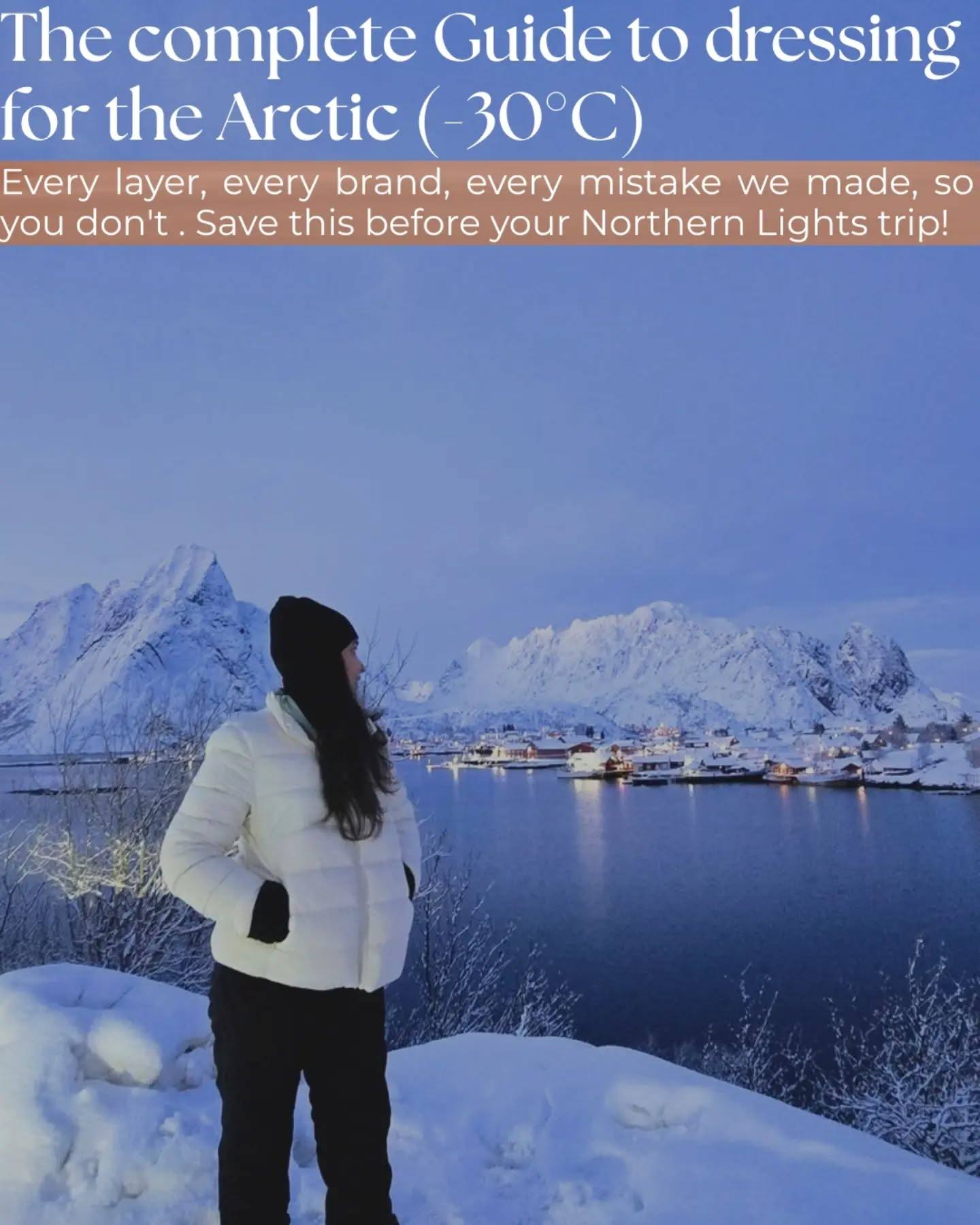
I feel cold at 20°C in Hyderabad. In Finnish Lapland I stood on a frozen lake at −30°C for two and a half hours and walked back warm. The weak spot was our feet. On Valentine’s Day, our first aurora night in Finland, ours were frozen from standing on the lake, and the tour bus was idling, waiting for the two of us to get back on.
This Lapland packing list from India comes out of that trip: 15 days in February across Helsinki, Rovaniemi, Ivalo, Kakslauttanen, Lofoten and Tromsø. What we wore was either bought in India, at Uniqlo (HEATTECH), Decathlon and Marks & Spencer, or rented. Euro prices are converted at ₹103.89 to the euro, the rate on 13 November 2026.

What goes on a Lapland packing list from India?
Pack these from home:
- Thermal tops and leggings in merino or a synthetic like HEATTECH, enough to wear one set while another dries
- A fleece or a wool jumper
- An insulated jacket, plus a windproof, waterproof shell if the jacket isn’t both
- Warm trousers to go over the leggings
- Thick wool socks and thin liner socks
- Waterproof, insulated boots with good grip, a size bigger than usual
- Thin liner gloves, and mittens if your tours won’t lend you any
- Two caps and a neck gaiter
- Hand warmers
- Pull-on ice spikes for icy pavements
- A power bank, a headlamp, lip balm and a thick moisturiser
- Ready-to-eat meals with no meat or dairy in them
Rent the thermal overall, the heavy activity boots and the big mittens in Lapland, or take them from your tour. The jacket, gloves, caps and neck gaiter go in your cabin bag.
How cold does Lapland get in winter?
Rovaniemi averages −10.3°C in both January and February (Finnish Meteorological Institute figures for 1991 to 2020), and Visit Rovaniemi puts a January day anywhere between −30°C and −15°C. We had −30°C on that lake, and again in Saariselkä further north, where it felt like living inside an actual snow globe.
The Norwegian half of the trip was wetter. The Gulf Stream keeps the coast far milder than inland Norway, and Visit Lofoten says winter daytime temperatures usually sit between −5°C and 5°C, with sun, snow, sleet and rain possible in a single day. Its advice is to pack for wet, wind and ice rather than extreme cold. Bodø gave us exactly that: we walked out of lunch into a full snowstorm, with ice on the windscreen and ten minutes of complete chaos.
So one suitcase has to cover dry, deep cold in Finland and wet wind on the Norwegian coast. The outer layer has to keep out wind and water, and everything under it should come off and go back on quickly. If you’re still planning the route, our Finnish Lapland itinerary covers Rovaniemi and Saariselkä, and the Lapland destination guide has the rest of what we did there.

What should you wear in Lapland in winter?
Four layers on top, two on the legs, and no cotton against your skin. My carousel below goes through our four layers one by one. This is what each one is for:
- A close-fitting base layer in merino wool or a synthetic thermal fabric, to move sweat off your skin. Ours was Uniqlo HEATTECH. Cotton holds on to moisture, and damp clothes chill you fast once you stop moving.
- A mid layer for warmth: a fleece or a wool jumper.
- An insulated jacket with down or synthetic fill.
- A windproof, waterproof shell over the top, unless your jacket already does both jobs.
For your legs, wear thermal leggings under the warmest trousers you own. Lapland Safaris tells guests they don’t need to buy ski trousers for the trip, and on its safaris the guides hand out an overall that goes over whatever you have on.
Dress at the last minute. Put the outer layers on and step outside before you start sweating, because sweat soaks into the base layer and chills you as soon as you stand still.
How do you keep your feet warm at −30°C?
Give your toes room and wool. Standing still is what froze our feet, and an aurora tour is mostly standing in the snow, waiting. If you’re booking one, here’s how we got a northern lights tour in Lapland for under £100.
- Buy or rent boots at least one size bigger than usual. A little space around your feet keeps them warmer, and the extra room fits a second sock.
- Wear a thin liner sock under a thick wool one, and leave the cotton socks at home. Lapland Safaris suggests silk liners.
- Rental activity boots have an outer boot with an inner boot of compressed wool. They’re made for snowmobiles and frozen lakes, and they’re heavy to walk around town in.
- For towns and airports you need your own waterproof, insulated boots with proper grip. Finnair suggests pull-on ice cleats when the pavements are very icy, and Visit Lofoten recommends microspikes for the islands, where the roads we drove were cleared but icy.
On our half-day hike to a waterfall with Arctic GM, the guide, Gerda, handed everyone shoe spikes and overalls before we set off. If a tour offers gear, take it, even when you think you’re dressed enough. We still thawed out afterwards by the fire in a kota, with hot berry juice.
“I feel cold at 20°C in Hyderabad. I stood on a frozen lake at −30°C for two and a half hours and walked back warm.”
How do you keep your hands, head and face warm?
Mittens over thin liner gloves, two caps and a neck gaiter. Mittens are warmer than gloves because your fingers share one pocket of heat, and with liners on you can pull a mitten off for a photo without bare skin touching snow or a metal railing. Hand warmers were part of our kit too, and the easiest place for them is inside your mittens.
Wear a cap whenever you’re outdoors. Finnair says the warm hat is the thing visitors often forget, and my carousel shows the two-cap trick we used.
We used the neck gaiter more than anything else on the trip. It goes up over your nose and cheeks when the wind picks up, and it comes off in one pull when you walk into a warm café. Expect more wind anywhere high up or by the sea. At the top of Fjellheisen in Tromsø, bring gloves, because the wind up there is a different animal (the cable car and the rest of the city are in our Tromsø winter guide).
Keep your jacket and gloves in your cabin bag, not the checked suitcase. The step off the plane into the Arctic air in Tromsø hits immediately.
Should you buy winter clothes in India or rent them in Lapland?
Buy anything that touches your skin or that you’ll wear every day. Rent the bulky gear you only need for activities.
From India, that means thermal tops and leggings, wool socks, liner gloves, two caps, a neck gaiter, a fleece and a warm jacket you can wear around town and on flights. Uniqlo had 19 stores in India as of May 2026, and we got the rest of our winter basics at Decathlon and Marks & Spencer. None of it is heavy, and you’ll wear it again on the next cold holiday.
In Lapland, rent the thermal overall, the heavy boots and the big mittens. Visit Rovaniemi says many activity companies rent out thermal overalls and footwear, and Lapland Safaris includes thermal clothing on all its guided activities. Its rental set has a one-piece overall, woollen socks, boots, mittens, a scarf and a hat, from offices in Rovaniemi, Luosto, Levi, Ylläs and Saariselkä.
A snowsuit and activity boots bought in India have to be paid for, dragged through Helsinki and Tromsø in your checked bag and stored through a Hyderabad summer until the next Arctic trip. Meanwhile many tours include the same gear at no extra cost.
How much does it cost to rent winter clothes in Lapland?
A full thermal set from Lapland Safaris was ₹2,290 (€22) for a day in the 2025-26 season, and it costs nothing if your tour includes clothing. That chart ran from 1 October 2025 to 30 September 2026. As of 14 November 2026 it’s still the only price list on the company’s rentals page, so check the current rate when you book.
| What | Price per person (2025-26 chart) |
|---|---|
| Thermal clothing set, pick up and return the same day | ₹2,290 (€22) |
| The same set for a day and a night | ₹2,910 (€28) |
| Each extra day | ₹2,290 (€22) |
| Five days | ₹12,050 (€116), so ₹24,100 (€232) for two |
| Bag packed to your sizes before you arrive | ₹1,250 (€12) on top of the rental, minimum ₹7,480 (€72) per booking |
| Set delivered to your hotel | ₹3,950 (€38) on top of the rental, minimum ₹23,690 (€228) per booking |
| Thermal clothing on a Lapland Safaris guided activity | Included |
Watch the minimums if there are only two of you. A couple pays the full ₹7,480 (€72) for a packed bag and ₹23,690 (€228) for hotel delivery, so collecting from the office is much cheaper.
Can you take Indian ready-to-eat meals to Finland?
Yes, as long as they contain no meat and no milk. The Finnish Food Authority says travellers arriving from outside the EU can’t bring meat or dairy products in their luggage, and that food with no fresh or processed meat or milk in it is free to bring. That covers anyone flying in from India, including us on Finnair from Delhi to Helsinki (how we paid ₹2,040 a seat with Avios).
Read every label before you pack. A paneer curry, or a dal finished with butter or cream, counts as a dairy product. A rajma, chana or plain dal with no milk, butter, ghee, cream or paneer in it doesn’t. Spices, tea, coffee, nuts and flour are fine. Fresh fruit and vegetables need a phytosanitary certificate from the country of origin, which is hard for a traveller to get, so finish the fruit before you fly. Bananas and dates are among the few exceptions.
We carried at least 15 packets of ready-to-eat meals, and they saved us on ferries, flights and tight schedules. Near our glass igloo in Lapland, a ski resort 800 metres’ walk away served hot meals, which made a nice break from the stash. Everywhere else, one line worked: “Can you make this without meat?” At one resort the chef made a pasta from our description, and at an Indian restaurant in Tromsø the owner put together a pure-veg spread without being asked twice. Even the McDonald’s we found up there does a veg meal.

What else do you need for the dark and the dry air?
- A power bank, and an inside pocket for your phone. Apple designs iPhones for temperatures between 0°C and 35°C and says extreme cold can shorten battery life or switch the phone off until it warms up. Our off-grid cabin in Finnish Lapland had no electricity at all.
- A headlamp. Visit Rovaniemi puts average daylight at about four hours in January and eight in February.
- Lip balm and a thick moisturiser. Finnair points out that the air in Lapland is dry.
How much should a couple pack for two weeks in the Arctic?
Less than you’d think, because layers do the job outfits usually do. You wash and rotate the base layers. The jacket, gaiter, caps and boots stay the same every day, and nobody in a −30°C car park is checking whether you wore that jacket yesterday. For two weeks, one jacket, one fleece and one pair of town boots each is plenty; it’s the thermals and socks you need several of.
My husband loves his uniform, what can I say? The reel shows which of us is the over-packer and which is the one-jacket wonder.

In what order should you pack for Lapland?
Start about a month before you fly, so there’s time to swap boots that don’t fit over two pairs of socks.
- List your activities and check which ones include thermal clothing. That tells you how many days you need to rent.
- Shop in India for base layers, wool socks, liner gloves, caps, a neck gaiter, a fleece and your jacket. Try boots on with both pairs of socks.
- Book rental for the days that aren’t covered. If you want Lapland Safaris to pack a bag to your sizes, it needs your shoe size in centimetres, height, weight and EU clothing size, and the ₹7,480 (€72) minimum applies.
- Buy your ready-to-eat meals and check every label for dairy.
- Put the jacket, caps, gloves and neck gaiter in your cabin bag, and wear your heaviest boots on the plane.
- Charge the power banks the night before you fly, and send this list to the person who says they’ll “manage”.
Skip it
Buying a snowsuit and heavy activity boots in India for one trip. Many Lapland tours include them, and a full rental set was ₹2,290 (€22) a day on Lapland Safaris' 2025-26 price list.
Questions people ask
What should I wear in Lapland in winter?
Four layers on top: a merino or synthetic base layer, a fleece or wool jumper, an insulated jacket and a windproof, waterproof shell. Add thermal leggings under warm trousers, wool socks, boots a size up, mittens over liner gloves, a cap and a neck gaiter.
Should I buy winter clothes in India or rent them in Lapland?
Buy what touches your skin or gets worn every day in India: thermals, wool socks, liner gloves, caps, a neck gaiter, a fleece and a warm jacket. Rent the overall, activity boots and big mittens in Lapland, or use what your tour provides. Lapland Safaris charged ₹2,290 (€22) a day for a thermal set in its 2025-26 season.
Can I take Indian ready-to-eat food to Finland?
Yes, if it has no meat and no milk in it. The Finnish Food Authority doesn't allow meat or dairy products in luggage from outside the EU, so check labels for milk, butter, ghee, cream, paneer, milk powder and whey. We carried at least 15 packets.
How cold does Lapland get in winter?
Rovaniemi averages −10.3°C in January and February, and Visit Rovaniemi puts January days anywhere between −30°C and −15°C. We had −30°C on a frozen lake and in Saariselkä. Lofoten, on the Norwegian coast, is milder (usually −5°C to 5°C by day) but wetter and windier.
Do Lapland tours provide warm clothing?
Many do, so ask before you rent. Lapland Safaris includes thermal clothing on all its guided activities, and on our hike with Arctic GM the guide handed everyone overalls and shoe spikes.
Know before you go
- Budget
- Thermal set rental ≈ ₹2,290 (€22) a day on 2025-26 prices; free on many tours
- Time needed
- Start shopping a month before you fly
What we checked · November 2026
- Finnish Food Authority: Bringing food for private use (meat, dairy, fresh produce and what is free to import from outside the EU) ruokavirasto.fi
- Lapland Safaris: What to wear in winter in Lapland (layers, mittens, boots a size up, no ski trousers needed, thermal clothing included on guided activities) laplandsafaris.com
- Lapland Safaris: How to dress in winter in Lapland (gear handed out by guides, inner boot of compressed wool, waiting outside before you sweat) laplandsafaris.com
- Lapland Safaris: Thermal clothing rental (set contents and rental offices) laplandsafaris.com
- Lapland Safaris: Rental services 2025-2026 price chart (PDF, valid 1 Oct 2025 to 30 Sep 2026; still the only chart linked from the rentals page on 14 Nov 2026) a.storyblok.com
- Visit Rovaniemi: Winter in Rovaniemi (temperatures and daylight by month) visitrovaniemi.fi
- Visit Rovaniemi: FAQ (winter clothing; activity companies rent thermal overalls and footwear) visitrovaniemi.fi
- Wikipedia: Rovaniemi climate (Finnish Meteorological Institute 1991-2020 averages, Rovaniemi airport station) en.wikipedia.org
- Finnair Blue Wings: How to dress for the Finnish winter (layers, hats, ice cleats, dry air) finnair.com
- Visit Lofoten: Lofoten in winter (temperatures, Gulf Stream, microspikes) visitlofoten.com
- Apple Support: If your iPhone or iPad gets too hot or too cold support.apple.com
- Wikipedia: Uniqlo (HEATTECH; 19 stores in India as of 31 May 2026) en.wikipedia.org
- Currency.me.uk: EUR to INR (1 EUR = 103.89 INR on 13 November 2026) currency.me.uk


