Northern lights in Norway and Finland: aurora on 8 of our 14 nights
Fourteen Arctic nights across Finnish Lapland, Tromsø and Lofoten, and the aurora on eight of them, once in a supermarket car park. What we planned around, and how to read the forecasts.
Words Bhavya · · Updated
 Photo: Pascal Debrunner
/
Unsplash
The short version
Pick dates around the new moon, check cloud before Kp and sleep away from city lights. We saw the aurora on 8 of the 9 nights we weren't flying or in a city.
Fourteen Arctic nights across Finnish Lapland, Tromsø and Lofoten, and the aurora on eight of them, once in a supermarket car park. What we planned around, and how to read the forecasts.
What we'd actually do
-
Book four to five nights at least, in the week before a new moon or the three days either side. Next ones: 9 Dec, 7 Jan, 6 Feb, 8 Mar.
-
Check Yr for cloud in the afternoon, then the aurora forecast. In northern Lapland a Kp of 1 to 2 can be enough if the sky is clear.
-
Sleep outside towns, in a standalone cabin or a rorbu, with a car or a tour to chase clear sky. Our three city nights gave us nothing.
Last winter we spent 14 nights in the Arctic chasing the northern lights in Norway and Finland, and saw them on eight. Two of the six blank nights went on flights. Three were in cities, and we saw nothing on any of them. Take those five out and the sky showed up on eight of the nine nights that were left.
That wasn’t luck. We booked enough nights, set our dates around the new moon and mostly slept where we could get away from lights.
How many nights do you need to see the northern lights?
Four to five at the very least, and more if you can manage it. Cloud is the one thing you can’t plan around, and the only fix for a cloudy night is another night. Visit Finland says that in Lapland’s best months the lights show up on about every second clear night, so what you usually run short of is clear sky.
Here is how our 14 nights went:
| Nights | Where we were | Aurora? |
|---|---|---|
| 2 | On flights | No chance |
| 3 | In cities | None |
| 9 | Everywhere else | Yes, on 8 |
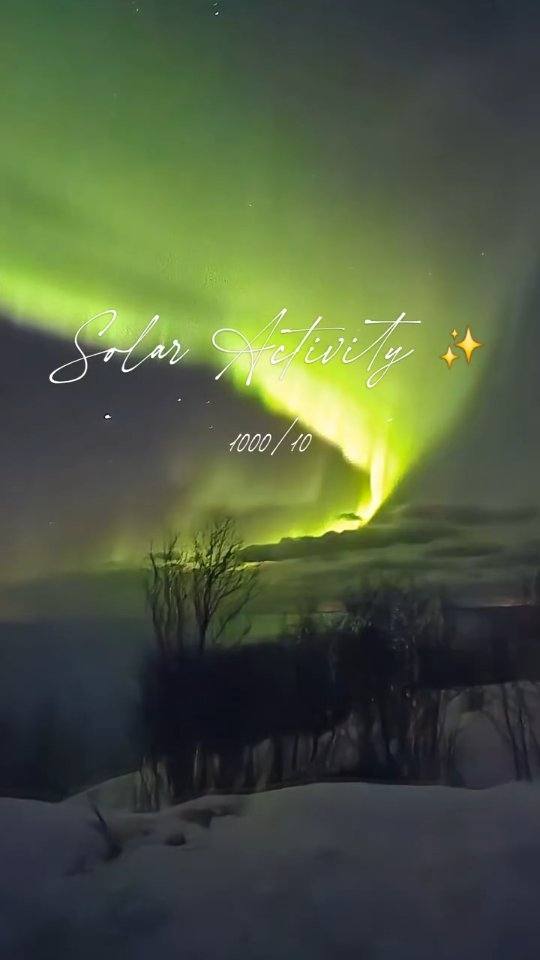
In Finnish Lapland it showed up over a frozen lake on a tour, over our glass igloo, and above a wooden cabin with no electricity and 30 km of birch forest around it. In Lofoten it came out three nights in a row. Tromsø was the one city that delivered: we saw the lights there from a cab, at a petrol station and on evening walks.
When is the best time to see the northern lights in Norway and Finland?
Between late August and March. Visit Norway gives the season as late August to late March, with the most activity in autumn and spring (September to October, March to April). Visit Finland says the end of August to April in Lapland, and names September to October and February to March as the peak months. NOAA puts the best hours at 10 PM to 2 AM local time, though ours didn’t always keep to that: the one in the Coop car park in Lofoten came before we’d even cooked dinner.
Within the season, we picked our dates by the moon. Cloud is still what makes or breaks a trip, but darkness is the part most people ignore. A full moon washes out everything except the strongest displays. (NOAA puts it more carefully: the moon dims how bright the aurora looks, not its real brightness.) We built our trip around the new moon, and our first aurora in Finland came on Valentine’s Day, three days before the new moon of 17 February 2026.
If you only have five or six nights, aim for the week leading up to a new moon, or the three days either side of it. This winter’s new moons, in Norwegian and Finnish time:
- 9 December 2026
- 7 January 2027
- 6 February 2027
- 8 March 2027
The full moons to plan away from fall on 24 November and 24 December 2026, then 22 January, 21 February and 22 March 2027.
I’d also go this winter rather than wait for a better year. NASA and NOAA announced in October 2024 that the Sun had reached the maximum phase of its 11-year cycle, and solar scientists have since confirmed October 2024 as the peak month. Storms get less frequent as activity falls, but NASA says scientists “often see fairly significant storms during the declining phase.” If the next cycle runs to the usual length, its peak is around a decade away.
Is the Kp index enough to predict the northern lights?
No. Check the cloud forecast first and the aurora forecast second.
Kp, the number every aurora app leads with, is a planetary average. NOAA describes it as the mean of readings from 13 magnetic observatories at mid-latitudes, worked out in three-hour blocks, so it tells you how stirred up Earth’s magnetic field is overall rather than what is happening above your cabin tonight. This far north you don’t need much of it. Visit Finland says a reading of 1 to 2 might be enough in northern Lapland, and that clear skies are the single biggest factor.
What we’d do each day:
- In the afternoon, check the cloud forecast on Yr for wherever you’re sleeping. Yr’s help page says high cloud is often thin enough to see the aurora through, while low cloud usually blocks it.
- Then look at the aurora forecast. Yr’s goes up to three days ahead. In Finland, the Finnish Meteorological Institute’s aurora page shows live readings from its magnetometer stations: yellow means auroras are possible but usually dim, and red means they are very likely.
- Once it’s dark, step outside every so often and look up, wherever you are. The Coop car park sighting and the Tromsø ones from a cab and a petrol station all happened while we were busy doing something else.
“We slept under the aurora in Finland but we drove under them in Lofoten.”
Can you see the northern lights in Lofoten without a tour?
Yes. We saw them three nights in a row with a rental car and no tour.
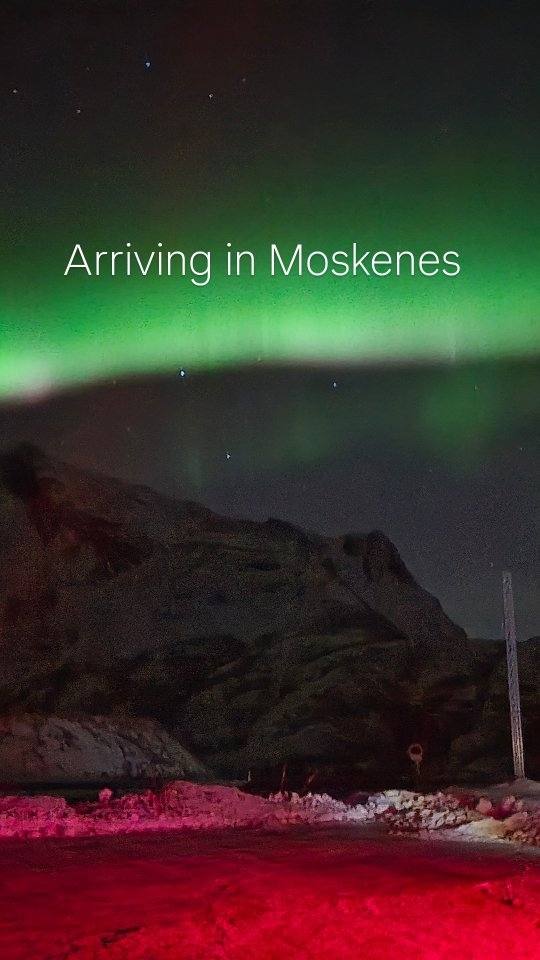
Night one was the arrival. We came off the ferry from Bodø at 8 PM, checked into our homestay by 9, and were still unpacking when our hosts knocked to say the lights were out. We grabbed the car keys and drove. Over Moskenes the aurora came up from behind a huge mountain, and our video doesn’t do it justice at all. The next day we drove the villages in the south, cooked dinner at Eliassen Rorbuer in Hamnøy, and the sky lit up again.
Night three was the most random. Roadworks on the E10 were closing the road for 45 minutes, opening it for 45, then closing it again all day, so we drove back early rather than risk getting stuck on the wrong side at dusk. We stopped at Coop for canned cocktails (Norway is expensive, but the multibuy deals on those were the best-value alcohol we found), walked out of the shop, looked up, and the sky was moving. We saw the northern lights somewhere between the trolley bay and the cocktail aisle, then went back to the cabin, cooked pasta, opened the cans and watched the window.
You need a car in Lofoten. We found public transport almost non-existent, and the weather changes in minutes, so with your own wheels you can drive out from under cloud or away from a village’s lights. Ours was a BYD Sealion 7 from SIXT at Bodø airport: electric, all-wheel drive, on winter tyres, about ₹29,500 (NOK 3,000) for three days with unlimited kilometres, and it came across on the ferry with us. The day-by-day route is in our two-day Lofoten winter road trip itinerary, and where to base yourself is in the Lofoten travel guide.
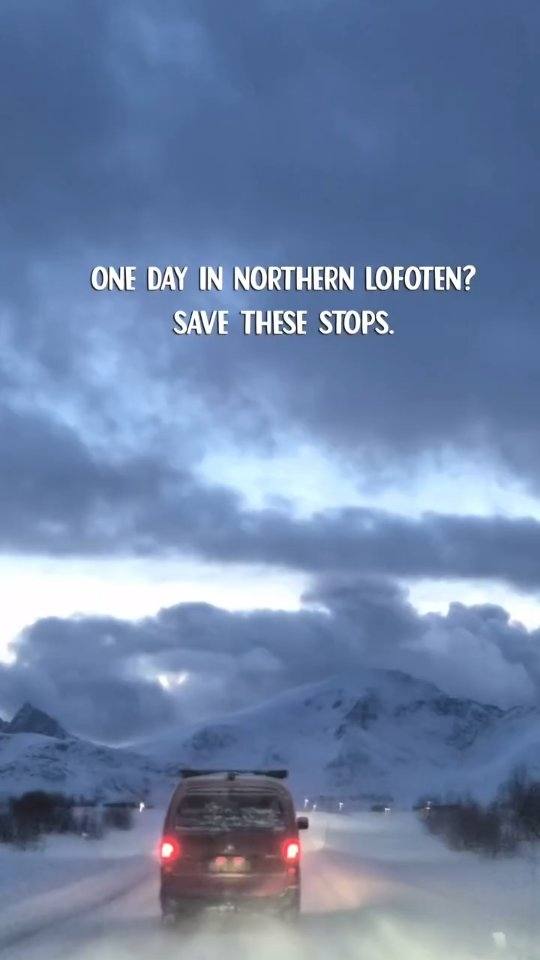
If you would rather not drive icy roads at night, these are the two small-group chases from Tromsø I would compare.
Is a northern lights tour in Finland worth it?
A good one is, and it doesn’t have to be expensive. We paid under ₹12,500 (£100) for our tour in Finnish Lapland, about half of what most people pay. It was all-inclusive with a 100% aurora guarantee, and I came home with over 200 pictures, all thanks to our tour operators. If photos matter to you, ask whether the guides take them, because our own videos never looked like what we saw in the dark. What a good tour includes, and the red flags to watch for, are in how to book a northern lights tour in Lapland for under £100.
Our first Finnish aurora came on Valentine’s Day. It was −30°C, our feet were frozen from standing on the frozen lake, and the tour bus was idling, waiting for us to get back on. Just as we turned to leave, the sky went green, then purple. I cried so many happy tears. We started screaming and clapping like kids, and the whole bus emptied out again so everyone could stand in the snow and watch. We almost cost 60 people their sleep. If your feet can take it, don’t be the first one back on the bus.
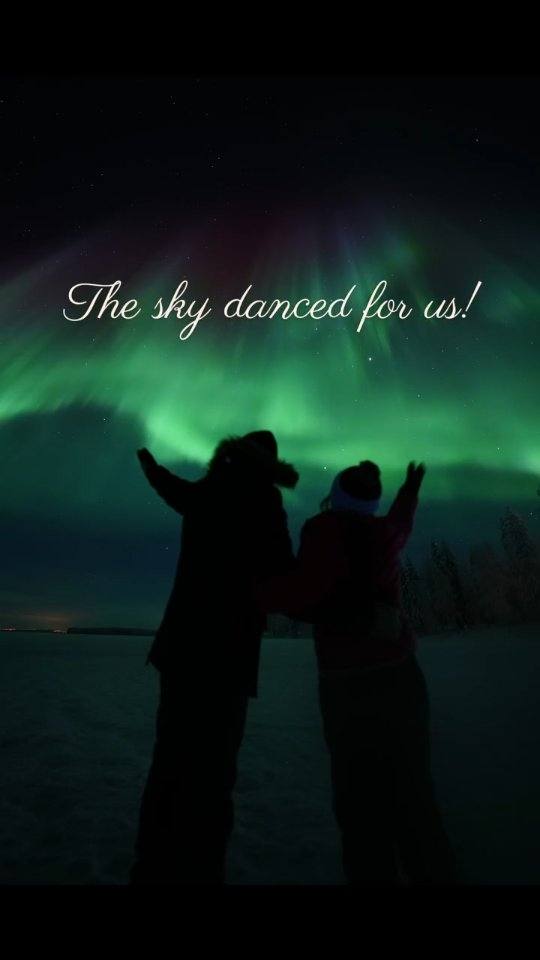
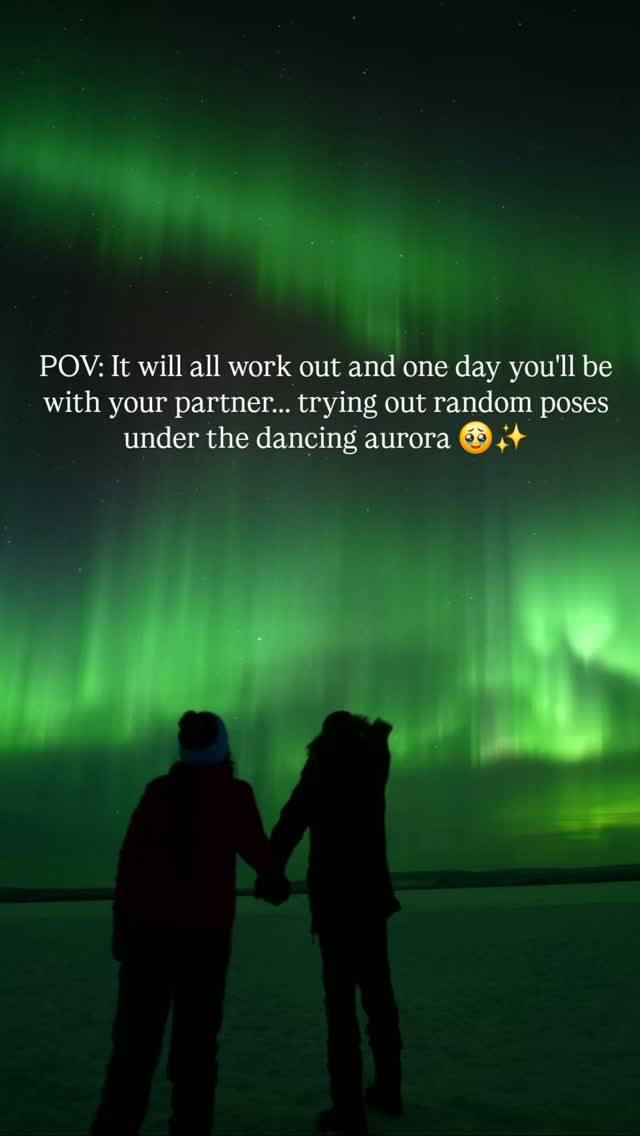
Even in Lapland you have to get away from lit buildings. Visit Finland says artificial light pollution matters less in Finland than in many countries, and that even Rovaniemi has dark skies nearby. Big glass igloo resorts usually charge £500 to £700 (₹62,000 to ₹87,000) a night, and their closely packed cabins have outdoor sensor lights that switch on whenever anyone moves. We paid about ₹31,000 (£250) for a standalone igloo with no neighbours, and with the sky pitch black around us we could spot the faintest aurora before it exploded overhead. How we found it is in our guide to a cheaper glass igloo in Lapland.

Norway or Finland: which is better for the northern lights?
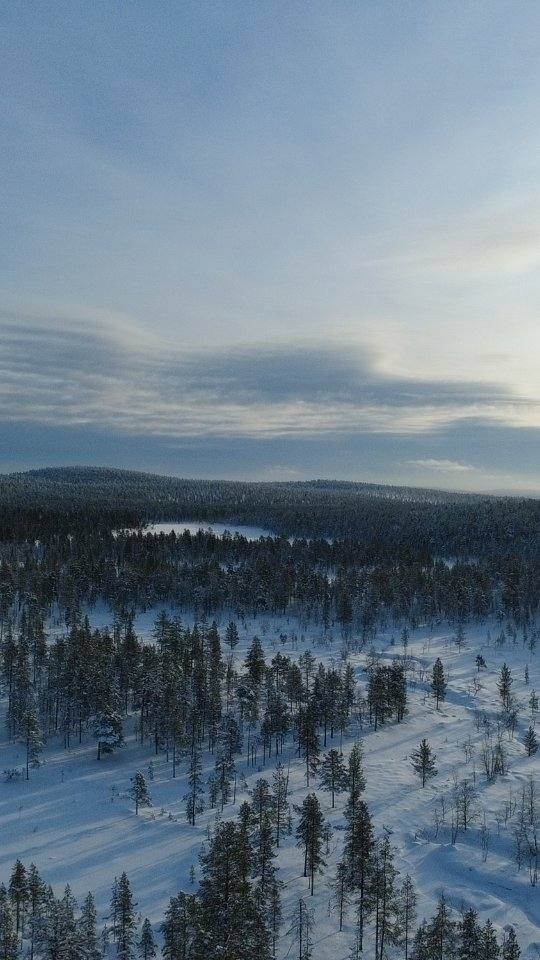
We saw them in both, so pick by how you like to travel. In Finnish Lapland someone else did most of the work: the tour bus did the night driving, and the igloo and the cabin in the forest were already dark when we got there. It is also properly cold. We explored Saariselkä at −30°C. In Lofoten we did our own chasing in the rental car, on roads that were cleared but icy, and two of our three sightings there happened because we were out in the car.
Tromsø is the easy middle option, a city you can fly straight into, where we saw the lights from a cab and on evening walks without booking anything. Our Tromsø winter guide covers where to look.
If you can only do one, pick Lapland if you’d rather someone else drove at night, and Lofoten if you’re happy behind the wheel on winter roads.
How do you photograph the northern lights on a phone?
Turn on night mode, switch the flash off and keep the phone completely still. Tom Kerss, who chases auroras for Hurtigruten, says a phone made in the last five years or so should have a night mode that handles the aurora well.
Visit Norway’s phone advice is to keep it on a tripod or a solid surface (a rock or a car bonnet will do), avoid digital zoom and shoot in RAW if your phone allows it, which leaves more room to edit later. It also says phones get their best aurora shots under a bright moon. That’s the catch with planning around the new moon: the darkest nights are the best for your eyes and the hardest for your phone.
If your phone or camera has manual settings, Visit Norway suggests starting at f/2.8, ISO 1600 and a 15-second exposure, with ISO anywhere from 800 to 3,200 depending on how much moonlight there is. Focus manually on a bright star until it looks as small as possible. When the aurora moves fast, shorten the exposure: Hurtigruten’s guide suggests 5 to 10 seconds for a bright, active display and 20 to 25 seconds for a faint one.
What should you wear to see the northern lights at −30°C?
I feel cold at 20°C in Hyderabad, and I still stood on a frozen lake at −30°C for two and a half hours and walked back warm. What did it: four layers, proper layers for the legs and feet, gloves with hand warmers, two caps, and a neck gaiter that we used more than anything else on the trip. We either bought it all in India, from Uniqlo’s HEATTECH range, Decathlon and Marks & Spencer, or rented it.
Feet were our weak point. On the Valentine’s Day tour they were frozen from standing on the lake by the time we turned to leave, so put warm socks and boots at the top of your list. Every layer, with what we bought and what we rented, is in our Lapland packing list from India.
What did chasing the northern lights cost us?
| What | In rupees | What we paid | Notes |
|---|---|---|---|
| Northern lights tour, Finnish Lapland | Under ₹12,500 | Under £100 | All-inclusive, 100% aurora guarantee, 200+ photos |
| Standalone glass igloo, Lapland | ≈ ₹31,000 | £250 | Big resorts usually charge £500 to £700 a night (≈ ₹62,000 to ₹87,000) |
| Rental car for Lofoten, 3 days | ≈ ₹29,500 | ≈ NOK 3,000 | Electric, all-wheel drive, winter tyres, unlimited km |
| Aurora and cloud forecasts (Yr, FMI, NOAA) | ₹0 | Free | All three are free websites |
| Delhi to Helsinki and back on Finnair | ₹4,080 per person | ₹4,080 per person | Taxes only; the fare was paid with Avios |
The flights saved us the most. The same tickets would have cost about ₹1,50,000 per person in cash, and how we booked Finnair from Delhi for ₹2,040 a seat walks through the Avios redemption. More aurora planning, including the stays that keep the sky dark, is on the northern lights hub.
These are the prices we paid in February 2026. Rupee figures use the European Central Bank reference rates for 13 November 2026, which work out to £1 ≈ ₹124.65 and NOK 1 ≈ ₹9.85.
Skip it
The big glass igloo resorts at £500 to £700 a night: the cabins sit close together and the neighbours' sensor lights keep switching on. Our standalone igloo cost £250 and the sky around it was pitch black.
Questions people ask
How many nights do you need to see the northern lights in Norway or Finland?
Give it four to five nights at the very least. We had 14 Arctic nights: two went on flights and three were in cities, and the aurora showed up on 8 of the 9 that were left.
Is Norway or Finland better for the northern lights?
We saw them in both. In Finnish Lapland the tours, glass igloos and forest cabins do the work for you, and it gets very cold (we had −30°C in Saariselkä). In Lofoten we found the lights ourselves from a rental car, so it suits people happy to drive on icy winter roads.
What Kp index do you need to see the northern lights in Lapland?
Visit Finland says a Kp of 1 to 2 might be enough in northern Lapland. Clear skies matter more than Kp, so check the cloud forecast first.
When are the new moons for northern lights this winter?
In Norwegian and Finnish time: 9 December 2026, 7 January 2027, 6 February 2027 and 8 March 2027. Aim for the week leading up to one of those dates, or the three days either side.
Can you photograph the northern lights on a phone?
Yes. Use night mode, turn the flash off, keep the phone on a tripod or a solid surface and shoot in RAW if your phone allows it. Carry a power bank, because batteries drain fast in the cold.
Know before you go
- Best time
- Late August to March (into April in Lapland); aim for the week before a new moon
- Budget
- Our Lapland tour: under ₹12,500 (£100)
- Time needed
- 4 to 5 nights minimum; we had 14
What we checked · November 2026
- Visit Norway: The northern lights (season late August to late March, most activity in September to October and March to April) visitnorway.com
- Visit Norway: How to photograph the northern lights (f/2.8, ISO 1600, 15 seconds; phone tips; bright moon for phones) visitnorway.com
- Visit Finland: The best times to see the Northern Lights (end of August to April, every second clear night, Kp 1 to 2, light pollution) visitfinland.com
- NOAA Space Weather Prediction Center: Tips on viewing the aurora (10 PM to 2 AM, full moon) spaceweather.gov
- NOAA Space Weather Prediction Center: Planetary K-index (13 observatories, three-hour index) spaceweather.gov
- Finnish Meteorological Institute: Auroras and space weather (live magnetometer readings, yellow and red thresholds) en.ilmatieteenlaitos.fi
- Yr help centre: Aurora forecast on Yr (three days ahead, high and low cloud) hjelp.yr.no
- NASA Science: NASA, NOAA say the Sun has reached the maximum phase of its 11-year solar cycle (15 October 2024) science.nasa.gov
- STCE (Royal Observatory of Belgium): Solar Cycle 25 reached its maximum in October 2024 stce.be
- timeanddate.com: Moon phases 2026, Oslo time timeanddate.com
- timeanddate.com: Moon phases 2027, Oslo time timeanddate.com
- Hurtigruten: How to photograph the Northern Lights (Tom Kerss on phone night mode and shutter speeds) hurtigruten.com
- European Central Bank: euro reference exchange rates, 13 November 2026 (GBP 0.83559, NOK 10.5695, INR 104.1575) ecb.europa.eu


